updated 2026-11-28·4 min read
theology
agnostic by occam's razor
I grew up in an Indonesian Islamic family, pretty average setup. Right now though, I sit closest to agnosticism, mainly because of Occam’s razor.
Calling myself agnostic instead of atheist isn’t hedging for the sake of it: claiming for certain that nothing exists feels like it demands even more faith than leaving the door open. Neither side has actual proof, so at the end of the day you are just picking which brute fact feels heavier to swallow: adding an unobservable Creator on top of everything, or accepting existence and fine-tuned consciousness out of blank matter with zero explanation. For me it becomes a fight over which model packs fewer contradictions, and standard afterlife doctrines break down on basic logic fast.
Many worlds in God’s mind
Years back I somehow ended up stitching together a framework of my own that turns out to resemble “epistemic idealism”, mixed with bits of Molinism, divine idealism, fixed entities, eternalism, and moral realism.
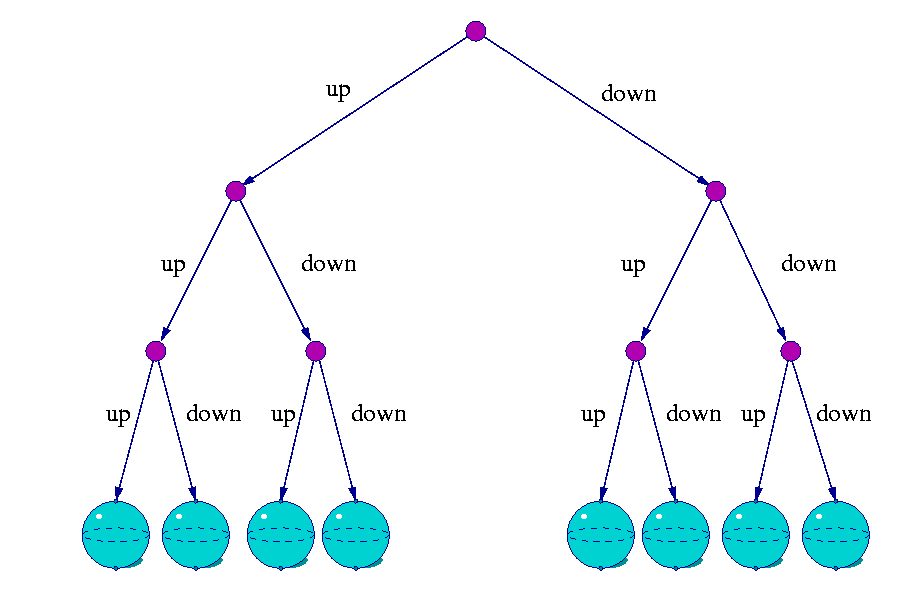
The core setup is simple: an all-knowing God outside time has to know every possible life and every possible universe before creating anything, so all of us pass through that mind in some incomprehensible span before anything is actually made real.
I know about hujjah, the fairness argument that God only rewards or punishes you for what was actually realized so nobody can complain “I never committed that!”. Yet the paradox stays intact. God still chose which exact foreseen universe to instantiate for judgment, and an all-knowing creator cannot suddenly choose not to know what he built just to save “free will”, or we are right back at the stone-lifting paradox. Turns out classical Sunni Ash’ari scholars saw that exact domino trap coming and bit the bullet with kasb (God directly creates every action while humans merely “acquire” it as it happens), which leaves free will looking more like actors inside a script than an unscripted test. Trying to keep omniscience and true unscripted choice bolted together still feels like trying to draw a square circle.
Humanizing what supposedly isn’t human
Another thing that never stops bugging me is how trying to translate an incomprehensible God into human terms ends up making different people read the same text inconsistently.
Take the 99 positive names (Al-Asma al-Husna): giving yourself human-defined labels like All-Good, Merciful, or Just specifically so humans can understand you, and then the moment suffering or moral contradictions get pointed out, apologetics pivot straight to “well, we don’t know God’s actual intentions or what ‘good’ even means to him; God works in mysterious ways.” Like bruh, you picked human words so humans would get the point, and then moved the definition outside human comprehension the second it got inconvenient. It is the same reason heaven in the Qur’an gets framed around wine, gold, and material luxuries: translating an abstract promise into whatever humans at the time actually wanted so it stayed inside human comprehension.
To be fair, a friend pushed back on my whole “fewer contradictions wins” rule by pointing out that even science carries unresolved paradoxes without collapsing, so treating tidier logic as automatic proof is still trusting human intuition. Fair point honestly; after a certain point spinning around all of it just gets exhausting.
Talking about it
I have bounced this off friends (who are totally fine kicking around weird abstractions) and off Islamic teachers. With the teachers I eventually stopped pushing: it surprised me how someone teaching religion struggled to follow a basic many-worlds thought experiment or abstract hypothetical. Not all teachers are like that, obviously; it feels more like part of a wider habit in Indonesia where critical, abstract thinking isn’t encouraged much in general.
There are also plenty of other things I side-eye, like how organized religions treat femininity and misogyny, though I haven’t read enough of the sources yet to argue it properly. Between philosophy and Occam’s razor, agnosticism is just where the contradictions drop lowest without pretending I know.